

Every Grand Cayman family vacation booking we take asks the same first question on the phone: “is the pool fenced, and how deep does it get?” The second question is “do we need to rent a car?” The third is “what do we do when it rains?” Parents planning a Grand Cayman trip aren’t looking for a glossy brochure — they’re managing real anxieties about safety, logistics, and whether they’ll have the energy to keep three kids happy 4,000 miles from home. This guide is for them.
We’ve hosted thousands of family stays across 30 years of operating vacation rentals on the island. What follows is what we’ve learned about what works, what doesn’t, and what parents wish they’d known before they booked.
In a Nutshell
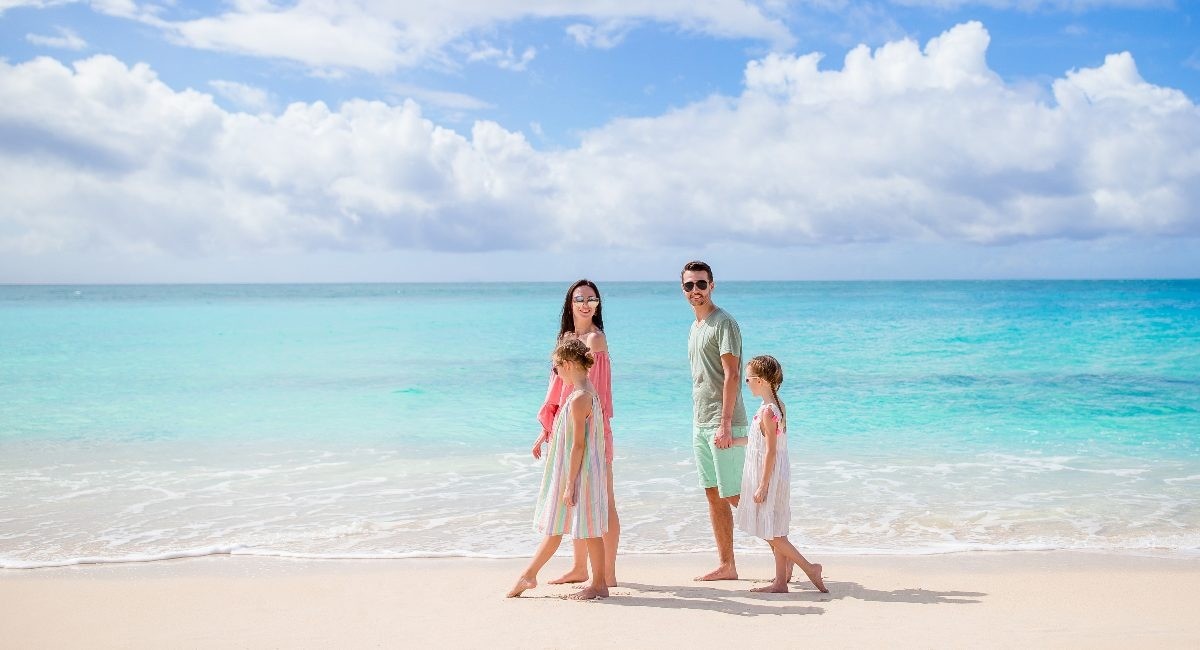
Grand Cayman is one of the easiest, safest, and most family-friendly Caribbean destinations a family with kids can pick. Direct 90-minute flights from Miami, English-speaking, low crime, safe tap water, calm reef-protected beaches, and a deep bench of kid-specific activities — Stingray City, Cayman Turtle Centre, Camana Bay, Crystal Caves, Bio Bay. A 5–7 night trip works best, ideally based in a vacation rental rather than a hotel room. Plan for 2–3 named activities and lots of unstructured beach time. Rainy days have real indoor options once you know where to look. Vacation rentals beat hotels for families almost every time because of the kitchen, the bedroom count, and the laundry.
Why Grand Cayman Is One of the Best Family Destinations in the Caribbean
The short case: low logistical friction, high safety, calm water.
A few things that matter to parents in particular. The island is small (76 square miles) and the roads are gentle and easy to drive — you can reach almost anywhere in 45 minutes. The water is reef-protected, which means most beaches are flat, shallow, and snorkelable directly from shore — much safer for kids who are still building water confidence than open-ocean Caribbean coastlines. The cultural infrastructure (English language, US dollars accepted, US-style electrical outlets, drinkable tap water) means almost nothing about the trip is logistically novel for North American families. And the Cayman Islands consistently rate as one of the safer Caribbean destinations per the US State Department, the UK government, and the Cayman Islands Official Tourism Board.
Best Time of Year for a Family Trip to Grand Cayman
| Season | Months | Why it works for families | Trade-off |
| Peak | mid-Dec – mid-Apr | Reliable sun, school holidays align, all operators running | Highest rates; popular weeks book months ahead |
| Shoulder | mid-Apr – Jun, Nov – early Dec | Warmer water, easier reservations, fewer crowds | Some afternoon showers; storm-watch risk in November |
| Low | Jul – Oct | Lowest rates, warmest water, fewest tourists | Hurricane season; school’s in session most of August onward |
For families, the genuine sweet spots are mid-April through May (after spring break ends, before school’s out, lower rates, beautiful weather) and early November (after kids start school but before US Thanksgiving, lowest crowds, decent weather, dramatically lower rates).
If you’re tied to school holidays, the easiest family weeks are the December break (book 6–9 months ahead) and spring break (book 4–6 months ahead). Summer (July, early August) is workable — warmer water makes the beach better — but you need to accept hurricane-season risk and buy travel insurance. The single weather variable that matters more than people expect: afternoon thundershowers between June and October can shut down water activities for 30–90 minutes. They usually pass quickly. Plan flexible.
Top Family-Friendly Activities in Grand Cayman
Two to four named activities for a week is the right number. More than that and the kids burn out. The list below is roughly ordered by what we see families book most often.
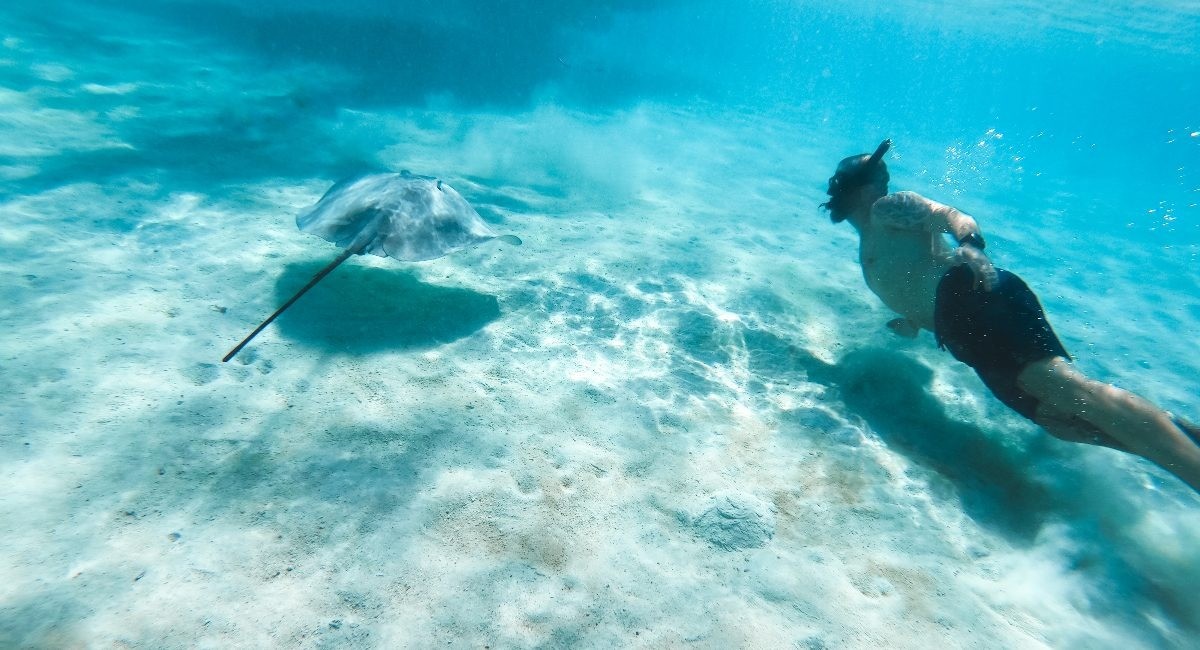
Stingray City Sandbar. The headline Grand Cayman family activity. Half-day boat tour to a chest-deep sandbar where Atlantic Southern Stingrays come to be fed. Toddlers can ride in their parent’s arms; older kids can stand on the sand themselves. Most operators welcome kids of all ages with parental supervision, and life vests are mandatory for children under 4 (some operators require parents to bring their own US Coast Guard-certified life vest for kids under 4 — check before you book). Age guidance: age 2 is the practical floor; under 4 is fine but requires parent-held supervision in the water. Our Stingray City visitor’s guide goes deeper. We’ve watched families try to do Stingray City on day one with a jet-lagged 4-year-old. It usually doesn’t work. Day three is the sweet spot.
Cayman Turtle Centre / Conservation Centre. A working sea-turtle conservation facility where kids can hold baby turtles and learn about the center’s release-into-the-wild program. Best for ages 4 and up; the holding area is supervised but younger toddlers can find the wet/slippery surfaces tricky.
Camana Bay. The island’s master-planned waterfront town center — walking paths, fountains, a kids’ splash pad, an ice cream kiosk, restaurants for all budgets, the Cayman Cinemas movie theater, and an observation tower the kids can climb. A full afternoon and dinner. Stroller-friendly throughout. Free parking.
Crystal Caves. A 1.5-hour guided walk through three connected limestone cave systems with stalactites and a cave lake. Suitable for kids 5 and up — some uneven surfaces, parents of toddlers will need to carry younger children. A 45-minute drive from Seven Mile Beach.
Bio Bay tour. A guided kayak or electric-boat trip into Grand Cayman’s bioluminescent bay after dark. Tours run year-round but the glow is strongest on new-moon nights. Best for ages 6+ — younger kids are usually past bedtime by tour time (most tours launch around 7–8pm).
Spotts Beach (snorkel with turtles). Free public beach near George Town where wild green sea turtles come to feed. Calm, shallow, and on the right day you can snorkel with turtles from shore. No operator needed.
Cayman Crystal Glass-Bottom Boat (or similar). For pre-snorkel-age kids: a glass-bottom or semi-submarine tour around the inner harbor reefs. Easier than getting little kids in masks and fins.
Queen Elizabeth II Botanic Park. A peaceful garden walk with the endangered Blue Iguana — kids 5+ love the iguana spotting. Decent stroller paths. About a 30-minute drive from Seven Mile Beach.
Cayman Cinemas at Camana Bay. Worth mentioning because it’s a parent rescue valve — a normal modern cinema for the afternoon when everyone’s done with the beach.
Mini golf. A standard kid pleaser; Margaritaville on Seven Mile Beach has a small pirate-themed mini golf course; ask at your rental for current options.

Best Beaches for Families in Grand Cayman
Five family-friendly beaches, ranked by how often we recommend them to families with kids:
Seven Mile Beach. The default. Long, soft, white sand; flat reef-protected water; numerous public access points; restaurants and washrooms within walking distance of most resort sections. Public Beach (the central-most public access) has restrooms, picnic tables, parking, and a Mobi-Mat installed across the sand for wheelchair and stroller access. Best for first-time family trips. The water is calm enough that toddlers can wade comfortably for 50 yards before it gets above their waist.
Rum Point. The north-side beach at Cayman Kai. Calmer than Seven Mile Beach (the North Sound is reef-protected on both sides), softer entry, more shade. Beach access and parking are free, the lot fills up on weekends, especially Sundays. A working beach bar (Rum Point Club) is on-site. Best for families willing to drive 45 minutes for the quieter setting. Pair it with a Cayman Kai stay (see our Cayman Kai guide).
Smith Cove (Smith’s Barcadere). A small cove just south of George Town. Sheltered, with natural rock formations that create tide pools — toddlers love them. Calmer than Seven Mile Beach because the cove is small and protected. Limited parking; arrive before 10am on weekends.
Spotts Beach. Quieter east-of-George-Town option with the wild green sea turtles. Calm shallow water. Best for ages 5+ who can manage a mask.
Starfish Point. Ankle-to-knee deep for hundreds of feet out, fine sand, resident cushion sea stars in the seagrass that kids will lose their minds over. Look-don’t-touch rule (the starfish die quickly out of water). A 5-minute drive east of Rum Point.
Stroller question: every booking inquiry from a family with a kid under two asks where the sand is firmest. The wet sand at low tide on Smith Cove is the answer; runner-up is the packed sand near the lifeguard stand at Seven Mile Public Beach.
Rainy Day Activities for Families in Grand Cayman
Rainy days panic first-time family visitors the most. Our returning families know rainy days are when Camana Bay earns its rent. Grand Cayman has thunderstorms June–October that usually pass in 30–90 minutes, so a rainy “day” is often a rainy hour or two. But when an actual half-day washout hits, you’ve got real indoor options.
Camana Bay. The default. A covered observation tower (the climb is the kids’ activity), the Cayman Cinemas multiplex, the Next Chapter bookstore (formerly Books & Books — rebranded in 2021 with the same coffee shop and kids’ area next door), the central-shopping arcade for browsing, and twenty restaurants across all price points. You can spend an entire rainy day here without leaving the covered walkways. Free parking. Stroller-friendly.
The Cayman Islands National Museum (George Town). A small but thoughtful museum covering Cayman’s natural history, maritime trade, and the modern country. Interactive enough for kids 6+. About 90 minutes is the right visit length. Wheelchair and stroller accessible.
Tortuga Rum Cake Factory (West Bay). A free bakery tour: you walk through the visitor center and watch bakers at work through observation windows — more than 5,000 cakes a day produced in front of you. Kids love watching the production line. Booking is recommended but not required. The adult rum sampling is in a separate room from the bakery viewing.
Cayman Cinemas at Camana Bay. First-run movies in a modern multiplex. The single most-used parent rescue valve when the rain won’t stop.
Indoor marine-life experiences. The Cayman Turtle Centre’s indoor exhibits are partially covered and work as a rainy-morning fallback alongside the outdoor tanks. [Editor: verify current operating status of any independent aquariums before publish — the local aquarium landscape has changed in recent years.]
King’s Sports Centre bowling. Indoor bowling alley in George Town. Family bowling for a couple of hours; usually a good rainy-day fallback. [Editor: verify current hours and lane availability before publish.]
Cooking classes and food tours. A few of the island’s better restaurants and cooking studios run family-friendly sessions, especially during low season. PRIME Food Tours — led by local Chef Dylan Benoit — runs island-wide culinary walking tours that older kids enjoy alongside the adults; ask your rental concierge about hands-on cooking class options at the time of booking.
Indoor dining as the activity. Long lunches at Camana Bay’s covered restaurants (Vivo, Eats Café, Mizu) or at any of the Seven Mile Beach hotel restaurants. A two-hour family lunch when it’s pouring outside is its own kind of vacation memory.
The rum cake factory + Hell + Cayman Turtle Centre West Bay loop. Three covered or partially-covered attractions clustered in West Bay that work as a half-day rainy-morning route.
Frame rainy days as the day you do the things you’d normally skip — the museum, the bowling, the long lunch, the movie. Bring layered clothing (the air-conditioning indoors runs cold in most public spaces).
Family-Friendly Dining in Grand Cayman
A few patterns we see work well for families:
Camana Bay restaurants. Wide range from casual (Eats Café, Mizu, Vivo) to mid-range. Strollers welcome, kids’ menus standard, outdoor seating with fountains the kids can watch. The lowest-friction family dining option on the island.
Seven Mile Beach hotel restaurants. Most resorts have a casual beachside option (Calypso Grill near West Bay, Catch on West Bay Road, Sunshine Grill at Sunshine Suites) where families fit easily.
Rum Point Club / Kaibo. Both have casual beachside lunch with kids’ menus. Great for combining with a Cayman Kai beach day.
The grocery-store / cook-at-home strategy. For most families staying in a vacation rental, the best move is to cook 60–70% of meals at the rental and eat out for the special-occasion ones. Foster’s on West Bay Road or Hurley’s Marketplace in Grand Harbour handle a week’s provisioning easily — including imported organic options, gluten-free, dairy-free, and kid favorites.
The most common request after the first night is laundry — kids and sand and sunscreen, every parent learns by morning two. Most of our family rentals have in-unit washer/dryers; check before you book.

Getting Around Grand Cayman with Kids
Rent a car. Almost always. Uber doesn’t operate on the island. Taxis are metered per person, so a family of five from Seven Mile Beach to Cayman Kai for dinner runs USD 100+ each way. Public minibuses don’t carry car seats and run unreliably for sightseeing. A rental car with the right car seats is the difference between an easy family week and a logistical headache.
Practical notes:
- Car seats. Most major rental companies (Andy’s, Avis, Budget, Hertz) rent infant and booster seats on request. Reserve them when you book the car — they’re sometimes scarce in peak season.
- Driving is on the left. It takes a day to get used to. Don’t drive at night until you’re comfortable. Our driving in Grand Cayman guide covers the rules in depth.
- Stroller in the trunk. Worth bringing your own collapsible stroller — they’re not always easy to rent at short notice.
- Airport transfer for arrival day. Some families book a private airport transfer for the arrival evening, then pick up the rental car the next morning when they’re rested. We see this work especially well for families landing on a redeye.
Accessibility for Families — Beaches, Activities & Rentals
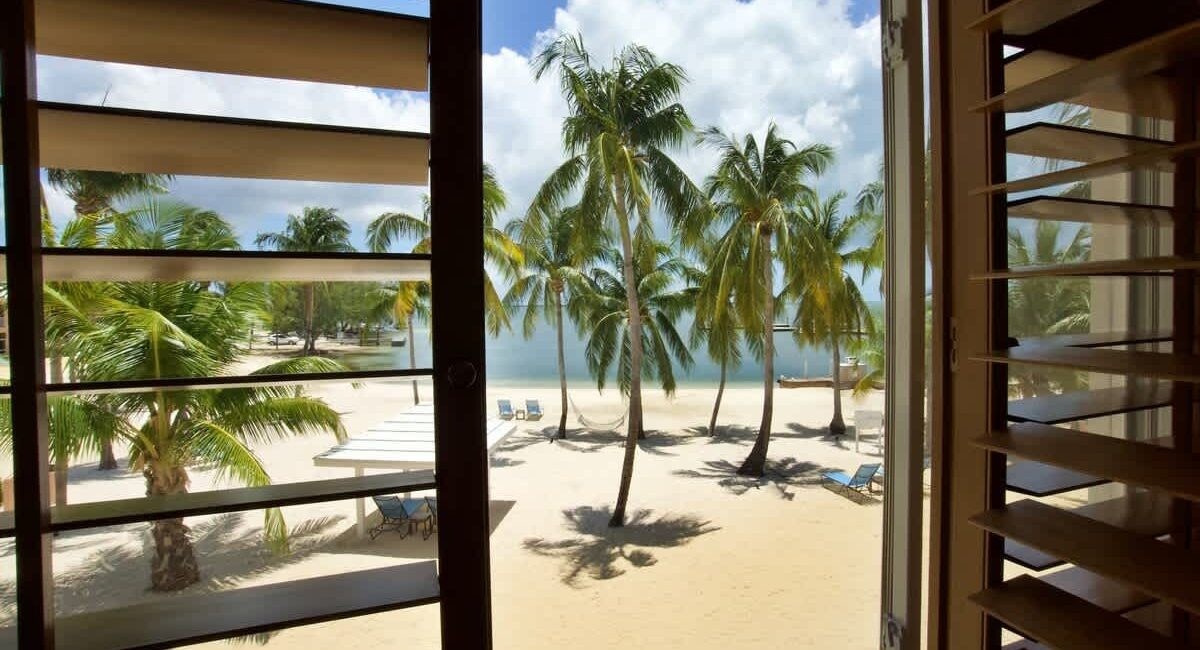
Grand Cayman is one of the better-equipped Caribbean destinations for families with mobility, stroller, or accessibility needs.
Wheelchair and stroller-accessible beaches. A permanent Mobi-Mat is installed at Seven Mile Public Beach, providing a non-slip pathway from the parking lot across the sand to the water — usable with most beach wheelchairs, manual chairs, and strollers. The Kimpton Seafire Resort + Spa also has Mobi-Mat access for guests. Governor’s Beach and Public Beach both have beach wheelchairs available — confirm with the on-site lifeguards. The packed wet sand at low tide on Smith Cove is the next-most stroller-friendly. Rum Point’s loose dry sand is the hardest for strollers; pick up a beach wagon if you’re staying at Cayman Kai.
Stroller-friendliness around the island. Camana Bay is excellent — paved paths, fountains, free parking, restrooms, elevators in the parking garage. George Town’s main shopping streets are mostly stroller-friendly with paved sidewalks. Seven Mile Beach has paved walkways at most public access points. The East End and the Cayman Kai/North Side residential roads are rougher — uneven shoulders, no sidewalks in many sections. For trips with strollers, basing in Seven Mile Beach or Camana Bay simplifies the day-to-day.
Adaptive water activities. Cayman has a long-standing reputation for accessible diving — instructors have been training to work with divers with disabilities since 1999. Adaptive-dive programs include Red Sail Sports, Sunset House, and Divetech (in partnership with the international Diveheart organization). Ocean Frontiers in the East End is another accessible dive resort. For young children, adaptive snorkel options are more limited; contact operators directly to discuss specifics. [Editor: verify current operator status before publish — adaptive programs occasionally pause and resume.]
Accessible accommodations. Some properties in our family-friendly inventory have step-free entry, wider doorways, ground-floor bedrooms, and roll-in showers. Filtering by accessibility specifics is best done by a direct call to our team rather than the site filters alone — call us with your kid’s needs and we’ll surface the right matches.
The Cayman Islands Official Tourism Board’s accessibility resources have the most current operator and venue list.
Vacation Rentals vs. Hotels for Families — Why Rentals Win
This is the most consequential decision parents make when booking a Grand Cayman family trip, so it’s worth slowing down on. For most families with kids, a vacation rental beats a hotel room — sometimes by a small margin, often by a wide one.
The kitchen. A full kitchen changes the math for any family with a picky eater, a kid with a food allergy, a baby on formula, or a toddler who falls apart if dinner is later than 6pm. Resort breakfast for a family of five every morning at USD 25 per person is USD 125 a day. A vacation rental with a full kitchen turns most of those meals into a USD 20 grocery run.
The bedroom count. A family of five in a hotel suite is often three kids and two parents in one room — meaning bedtime ends at 7pm for everyone, or nobody sleeps. A three-bedroom vacation rental puts the kids in their own room, the parents in theirs, and lets bedtime stay bedtime. Parents who book a hotel suite for a family of five and then need to keep three kids quiet through bedtime — we hear that regret often.
Laundry. Kids and beach and sunscreen mean two loads a day on a long trip. An in-unit washer/dryer is a quietly massive quality-of-life upgrade.
Private pool safety. Many of our family-friendly properties have private pools with safety fencing, gates, and shallow ends — much safer for non-swimmer kids than a resort pool with strangers’ kids cannonballing past. Always confirm pool fencing and depth in advance — it’s the first question every family asks us on the phone.
Living-room space. Older kids need somewhere to sprawl. Younger kids need somewhere to play that isn’t a hotel bed. Vacation rentals deliver this; hotel rooms don’t.
Value per square foot. A four-bedroom waterfront villa in Cayman Kai at USD 800/night is bigger and more private than a three-bed Seven Mile Beach hotel suite at the same price.
When a hotel makes more sense. Short trips (3–4 nights), families with only one child where space matters less, families who genuinely want the resort kids’ club to mind the kids while parents do adults-only things, or families uncomfortable cooking on vacation. For most other families, the vacation rental wins.
Where to start the search. Our family-friendly properties page filters our full inventory to homes and condos with kid-safe pools, full kitchens, bedroom configurations that work for families, and proximity to the beach. The Cayman Kai homes work especially well for multi-generational trips; Seven Mile Beach condos work well for short-trip simplicity; the East End villas work for families who want quiet.
Sample 7-Day Family Itinerary
A skeleton that we’ve watched work for families with school-aged kids (roughly 5–12). Move things around for nap times, weather, and energy. Assumes a Seven Mile Beach base.
Day 1 (Saturday) — Arrive. Land at GCM, pick up the rental car and car seats. Grocery stop at Foster’s on West Bay Road for breakfast supplies, snacks, sunscreen, and dinner basics. Check in. Walk the beach until sunset. Casual dinner at the rental, kids in bed early.
Day 2 (Sunday) — Slow beach day. Pancakes at the rental. Beach by 10am. Lunch at Calypso Grill or Margaritaville with the kids. Afternoon swimming. Ice cream at Camana Bay around 4pm. Dinner at Vivo or Eats Café.
Day 3 (Monday) — Stingray City. Morning half-day boat tour to Stingray City. Lunch back near the strip. Quiet afternoon at the rental — pool time, naps, reading. Pizza night.
Day 4 (Tuesday) — Cayman Turtle Centre + West Bay. Morning at the Turtle Centre. Lunch at the centre or at Crackin’ Conch in West Bay. Afternoon: Tortuga Rum Cake Factory bakery tour for the kids. Drive back via the West Bay scenic route. Dinner at the rental.
Day 5 (Wednesday) — Cayman Kai full day. Drive up to Rum Point by 10am. Beach time. Lunch at Kaibo or Rum Point Club. Afternoon at Starfish Point. Drive back via Frank Sound Road. Easy dinner — pasta night at the rental.
Day 6 (Thursday) — Camana Bay + cinema or museum. Beach morning. Lunch in. Afternoon at Camana Bay — kids’ splash pad, ice cream, the observation tower climb, maybe a movie at the Cayman Cinemas if it’s raining. Dinner at one of the Camana Bay restaurants.
Day 7 (Friday) — Last beach day, then prep. Beach morning. Slow lunch. Afternoon swim. Pack. Family dinner out at a sit-down restaurant the parents have been wanting to try.
Day 8 (Saturday) — Fly out. Slow morning at the rental, return the car, fly home.
Notice what’s not in there: no Crystal Caves (good for older kids, can drop in if there’s energy left); no East End (worth saving for a second trip); no Bio Bay tour (too late for many young kids — slot it in on day 5 evening if it’s a new-moon week and your kids are 8+); no dive day (parents who dive can split off for a half-day with a sitter).
Plan Your Family Trip to Grand Cayman
The trips that work best, in our experience, are the ones that don’t try to do too much. Pick one big-ticket activity (Stingray City), one quieter outing (a Cayman Kai day or the Cayman Turtle Centre), and leave the other five days for beach time, pool time, and slow meals. The point of a family vacation is rest, not bucket-list completion.
Browse family-friendly Grand Cayman vacation rentals by area, bedroom count, or budget. If you’re newer to the planning side, our first-timer Grand Cayman travel guide is the deeper walkthrough on entry, costs, and logistics. For the area question specifically, our Cayman Kai area guide and the Seven Mile Beach guide cover the two best family bases in detail.
About This Guide
This guide was researched and written by the Cayman Vacation editorial team from 30 years of operating family vacation rentals on Grand Cayman. Primary sources include the Cayman Islands Official Tourism Board (destination authority), the Cayman Turtle Conservation Centre (operator authority), and the US State Department Cayman Islands Travel Advisory (safety baseline). Secondary references include the Cayman National Museum, the Queen Elizabeth II Botanic Park, the Tortuga Rum Company, and PRIME Food Tours. Stingray City age guidance synthesized from multiple operator FAQs; the practical floor across operators is age 2 with parental supervision and US Coast Guard-certified life vests for children under 4.
Disclaimer
This article is published for general informational purposes only and does not constitute professional travel, immigration, or medical advice. Operating hours, ages, prices, weather conditions, and accessibility provisions change over time — always confirm current details with the Cayman Islands Official Tourism Board and your chosen operators before finalizing your family trip.
Frequently Asked Questions for Families
Is Grand Cayman good for families with young kids?
Yes. Grand Cayman is one of the easier Caribbean destinations for families with young kids. The water is reef-protected and shallow at most beaches, the island is small enough to drive end-to-end in 90 minutes, English is the working language, the tap water is safe, and the crime rate is consistently low. Stingray City, the Cayman Turtle Centre, Camana Bay, and the calm beaches give you a deep activity bench for kids of all ages. The main trade-off is cost — Grand Cayman is more expensive than the Dominican Republic or Mexico’s Caribbean coast.
What is the best area to stay in Grand Cayman with kids?
For most families with kids, Seven Mile Beach is the dependable default — walkable to dining, easy taxi access, full-service resorts and condos, and the calmest of the island’s busy beaches. Cayman Kai is the quieter alternative for families willing to drive 45 minutes and self-cater more — better suited to multi-generational trips or families with older kids who want flat water for paddleboarding. The East End is the quietest yet but typically too remote for a first family trip. We cover the trade-offs in our neighborhood guide to places to stay on Grand Cayman.
Are there all-inclusive options for families in Grand Cayman?
A handful, but Grand Cayman is not really an all-inclusive island. Unlike the Dominican Republic, Jamaica, or Mexico’s Caribbean coast, the Cayman dining and activity scene runs largely à la carte. A few resorts offer optional meal-plan add-ons, but a true Sandals-style all-inclusive isn’t the dominant model. Most families build their trip around a vacation rental or a non-inclusive resort and book activities separately, which usually gives more flexibility and better value.
What age is appropriate for Stingray City?
The practical minimum age across most Stingray City operators is age 2, with a parent or guardian supervising at all times in the water. Life vests are mandatory for children under 4, and some operators require parents to bring their own US Coast Guard-certified life vest for kids under 4 — check with your specific operator before booking. Toddlers can be held by a parent in chest-deep water; older kids can stand on the sandbar themselves. The stingrays are habituated to human contact and very gentle, but adult supervision is always required.
What do you do in Grand Cayman when it rains with kids?
Rainy hours are easier than rainy days — most Grand Cayman rain passes in 30–90 minutes. When a real washout hits, the best indoor options are Camana Bay (the covered walkways host shopping, restaurants, an observation tower, the Cayman Cinemas multiplex, the Next Chapter bookstore, and a kids’ splash pad area when the rain breaks), the Cayman Islands National Museum in George Town (kid-engaging exhibits on island history and natural environment), the Tortuga Rum Cake Factory bakery tour in West Bay (free, with viewing windows onto the production line), bowling at King’s Sports Centre, and long sit-down family lunches at any of the Seven Mile Beach hotel restaurants. The Cayman Turtle Centre’s exhibits are partially covered. Bring layers — indoor air-conditioning runs cold.
Are there wheelchair-accessible beaches in Grand Cayman for families?
Yes. A permanent Mobi-Mat is installed at Seven Mile Public Beach, providing a non-slip pathway across the sand for wheelchairs, mobility aids, and strollers. The Kimpton Seafire Resort + Spa also has Mobi-Mat access for guests. Beach wheelchairs are available at Public Beach and at Governor’s Beach — confirm availability with the on-site lifeguards before you arrive. For stroller-friendliness specifically: Smith Cove’s packed wet sand at low tide is the easiest, Seven Mile Public Beach is excellent with the mat, and the loose dry sand at Rum Point is the hardest. For trips with significant mobility needs, basing in the Seven Mile Beach area is the most practical choice.
Is Grand Cayman safe for children?
Yes. Grand Cayman is consistently rated one of the safer Caribbean destinations by the US State Department, the UK government, and the Cayman Islands Official Tourism Board. Violent crime against tourists is rare. The most common safety concerns for families on a Grand Cayman trip are sun (use reef-safe sunscreen, hats, and shade), water (most beaches are calm and shallow but always supervise kids near the ocean), and driving (left-hand traffic takes a day to get used to). The tap water is safe to drink island-wide, and medical care is high-quality and accessible in George Town. For full pre-trip safety prep, see our preparing for your Grand Cayman vacation guide.
Why should families choose a vacation rental over a hotel in Grand Cayman?
For most families with kids, a vacation rental is the better choice. The reasons compound. A full kitchen makes meal-time logistics dramatically easier with picky eaters, food allergies, formula-fed babies, or kids who need an early dinner. Separate bedrooms mean parents and kids both sleep — instead of a five-person hotel suite where bedtime ends at 7pm for everyone. An in-unit washer/dryer is a quietly enormous quality-of-life upgrade for any week-long beach trip. Private fenced pools are safer for non-swimmer kids than shared resort pools. And the per-square-foot value of a vacation rental — particularly at the 3+ bedroom level — beats equivalent hotel suites comfortably. Hotels still make sense for short 3–4 night trips, for families with only one child, or for parents who want a kids’-club operating in the background; for most other family configurations, the rental wins. Start your search at our family-friendly properties page.


